
THE OPERATIONS NOTE / 05 NOV 2026
Adding an ophthalmologist? Check technician coverage first
A practical launch review for independent practices adding physician sessions, prompted by today’s ESCRS discussion of practice expansion.
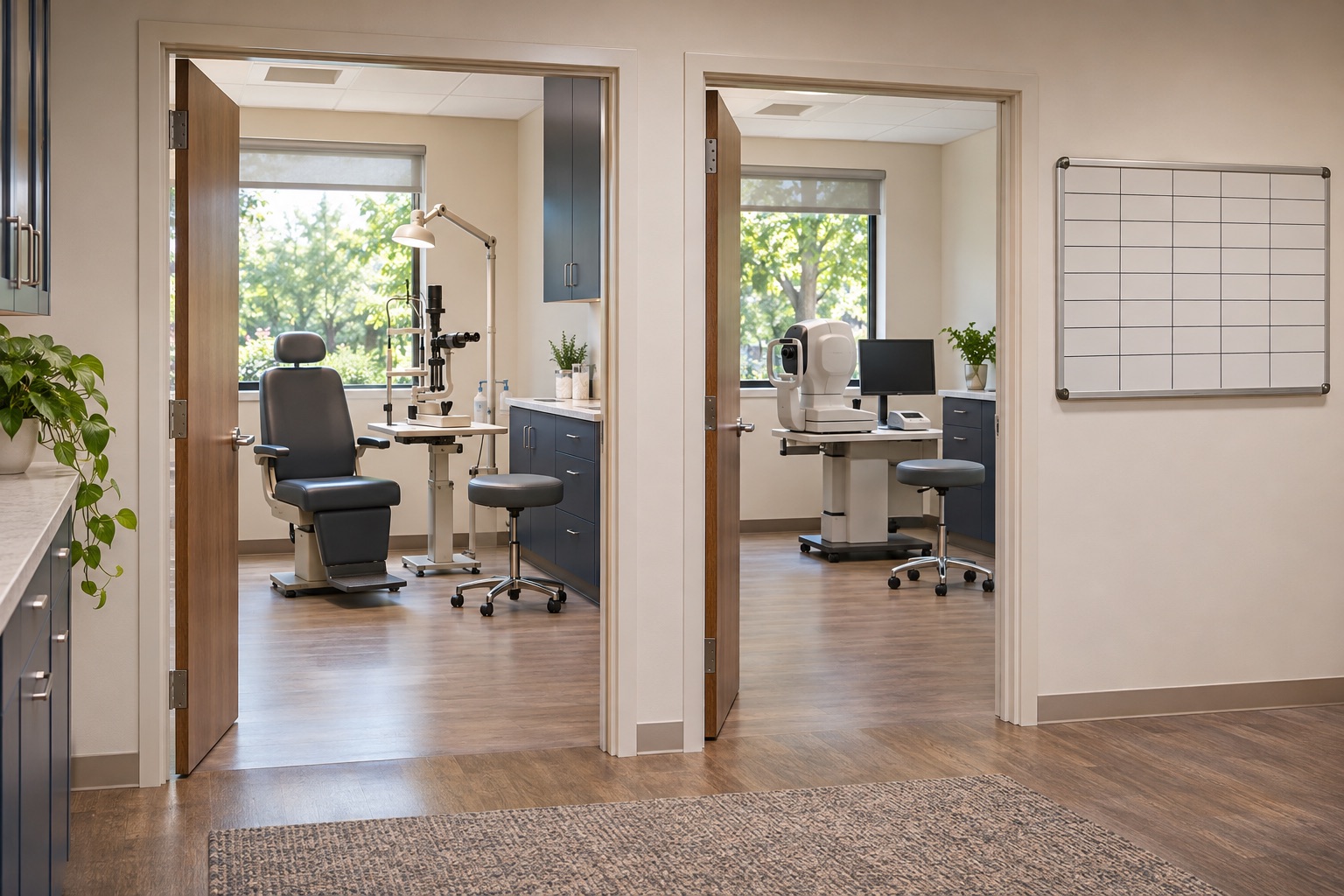
Before an independent practice opens a new physician's appointment template, I'd want to see the technician plan beside it. An available exam room is one part of that decision. The people covering workups, testing and supervision need a plan too.
An ESCRS article published November 5, 2026 puts practice expansion back on the agenda. It reports an earlier podcast discussion about growing a multi-physician group, including satellite locations and shared infrastructure. The discussion also covers private equity. For an independently owned US practice, I'm focusing on the operating question that comes before opening more sessions.
Find the resources both physicians need
I'd start with the proposed half-day and write down what overlaps with existing sessions. Include the technicians, testing equipment, rooms and supervision arrangements. Ask the lead technician and scheduler to review the same version of the plan.
A shared resource can look available when each physician's schedule is viewed separately. Put the sessions together and a conflict may become visible. If one qualified person is needed in both places, the appointment templates need a decision before patients are booked.
I wouldn't solve that by assuming everyone can cover every test. Record the competencies the work requires and the people the practice has approved to perform it. If training is part of the launch, include the supervision it needs in the coverage plan.
Compare three launch options
These are planning scenarios, not clinic results or staffing recommendations. Use your actual availability and operating rules to compare them.
- 01
Open the proposed session as designed
Place the new physician's visit mix beside the existing sessions. Check every shared person, room and testing resource. Record the specific conflict when the plan cannot be covered.
- 02
Change the session's timing or scope
Test whether a different half-day or a narrower initial appointment template would avoid the conflict. The clinical lead needs to approve changes to the clinical service offered.
- 03
Add qualified coverage
Identify the skill and time window that need coverage. Check hiring, training or approved cross-site coverage against the practice's real availability. Leave unresolved gaps visible.
I'd keep the assumptions attached to each option. A plan that depends on a new hire being ready has a different dependency from one using an available, approved team member. Give that dependency an owner and a date to confirm it.
Check the whole day when people move
If the practice has several sites, I'd check the transition between the morning and afternoon sessions. Travel, setup and handover need to fit the actual gap. The same person appearing on two half-day rosters doesn't establish that the transition works.
I'd also look at the other site after moving someone away from it. The new session's coverage is only half the decision. Does the original location still meet its own competency, availability and supervision requirements?
Our assignment process explains how KRH separates workload estimates from those coverage rules. For this launch review, the practical output is a list of feasible options and unresolved constraints that the scheduler can inspect.
Agree on a launch decision
I'd take the options to the person responsible for approving the schedule. The discussion should end with a written decision and the assumptions behind it. Use the questions below before opening the template.
- A
Can the roster cover the proposed work?
Name the available, qualified coverage for each session. Confirm the rooms and equipment can support the plan.
- B
What remains unconfirmed?
List hiring, training, equipment or scheduling dependencies. Assign a person to resolve each one before the relevant session opens.
- C
What would make us revise the plan?
Choose local review measures, a review date and an escalation owner. Observed technician minutes, unfinished testing, overtime and scheduler changes may be useful, depending on what the practice can measure.
Treat the new physician's history honestly
A new physician may have little local session history. I'd keep that uncertainty visible instead of borrowing another provider's average without explanation. Document any temporary planning assumption and review it as local observations become available.
For practices considering a forecast, our session data readiness guide covers consistent definitions and a fair comparison with the current spreadsheet. A forecast can help frame expected demand. A person still needs to decide whether the proposed plan is workable.
KRH's published evaluation uses synthetic data. It doesn't establish how a new physician will work in your clinic or what expansion will save. Phase Zero is a fixed-fee diagnostic scoped per clinic that tests the forecast on approved local history.
I want the staffing discussion to happen while the appointment template can still be changed. The useful result is a launch plan with clear coverage, named dependencies and a way to learn from the first sessions.
Sources and scope
- ESCRS: Structuring a Multi-Physician Practice in a Changing World
Published November 5, 2026; reports an earlier discussion of practice expansion, satellite offices and shared infrastructure. This motivates the original launch-review framework. Checked 2026-11-05.
- KRH: forecasting and assignment
Workload forecasts are separate from assignment constraints, including competency, availability, travel and supervision; human approval remains required. Checked 2026-11-05.
- KRH: evidence limits
Current published evaluation uses synthetic data and does not establish real-practice savings or outcomes. Checked 2026-11-05.
- KRH: Phase Zero scope
Fixed-fee diagnostic scoped per clinic, using local history and agreed evaluation gates. Checked 2026-11-05.
HELP US IMPROVE
Was this article useful?
Your response helps us choose and improve future articles.